Happy Schools Ukraine
Social and Emotional Learning for Teachers in War-Torn Ukraine
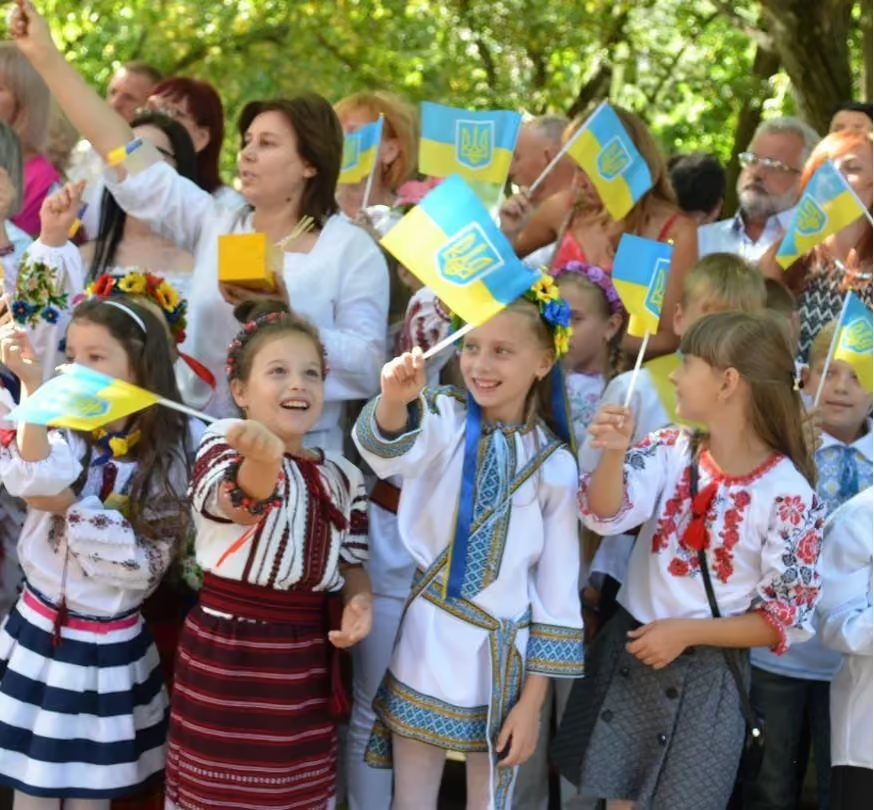
Ukrainian schools face a double challenge: rebuilding their education system while teachers and students live with trauma, loss, and the ever-present uncertainty of war. We work with teachers to help them find steadiness within themselves — because that steadiness is what makes learning possible.
“You taught us to breathe when we wanted to scream.” > — Teacher, Ukraine, 2025

Why Happy Schools?
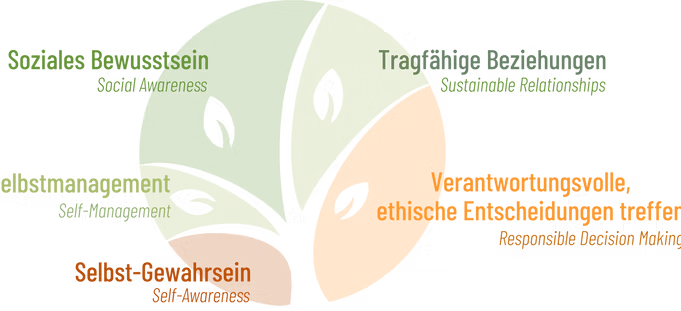
Happy Schools Ukraine is a Social and Emotional Learning (SEL) training programme for Ukrainian teachers and school principals — rooted in the Happy Schools format developed by Dr. Ha Vinh Tho (former Director of the Gross National Happiness Centre in Bhutan) and woven into Ukraine’s national education reform, the “New Ukrainian School.”
The programme is supported by the OECD under the patronage of Andreas Schleicher (Director for Education and Skills). The newly developed PISA Happy Life Dashboard now measures student wellbeing in 81 countries — and the evidence is clear: emotional competence is not a supplement to learning. It is what makes learning possible in the first place.
Core Goals: - Building self-regulation, resilience, and relational capacity in teachers - Shifting school culture: from hierarchy to trust, from burnout to presence - Making SEL a lasting part of Ukraine’s education reform
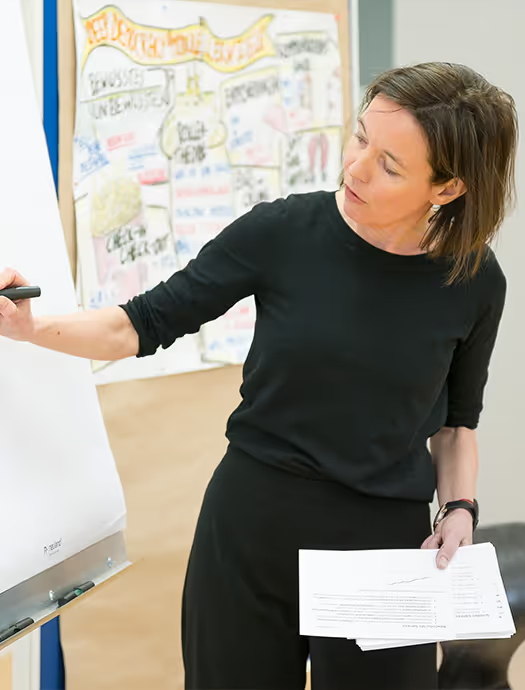


„Wo andere nicht weiterkommen, beginnt meine Arbeit“
"Ermöglichen statt erlauben"
"The Heart of Education is the Education of the Heart"
How It All Began
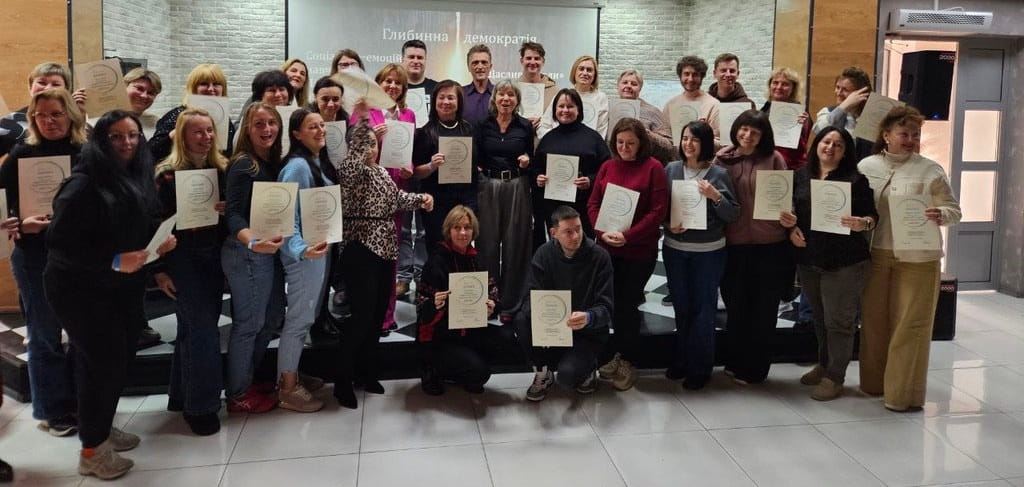
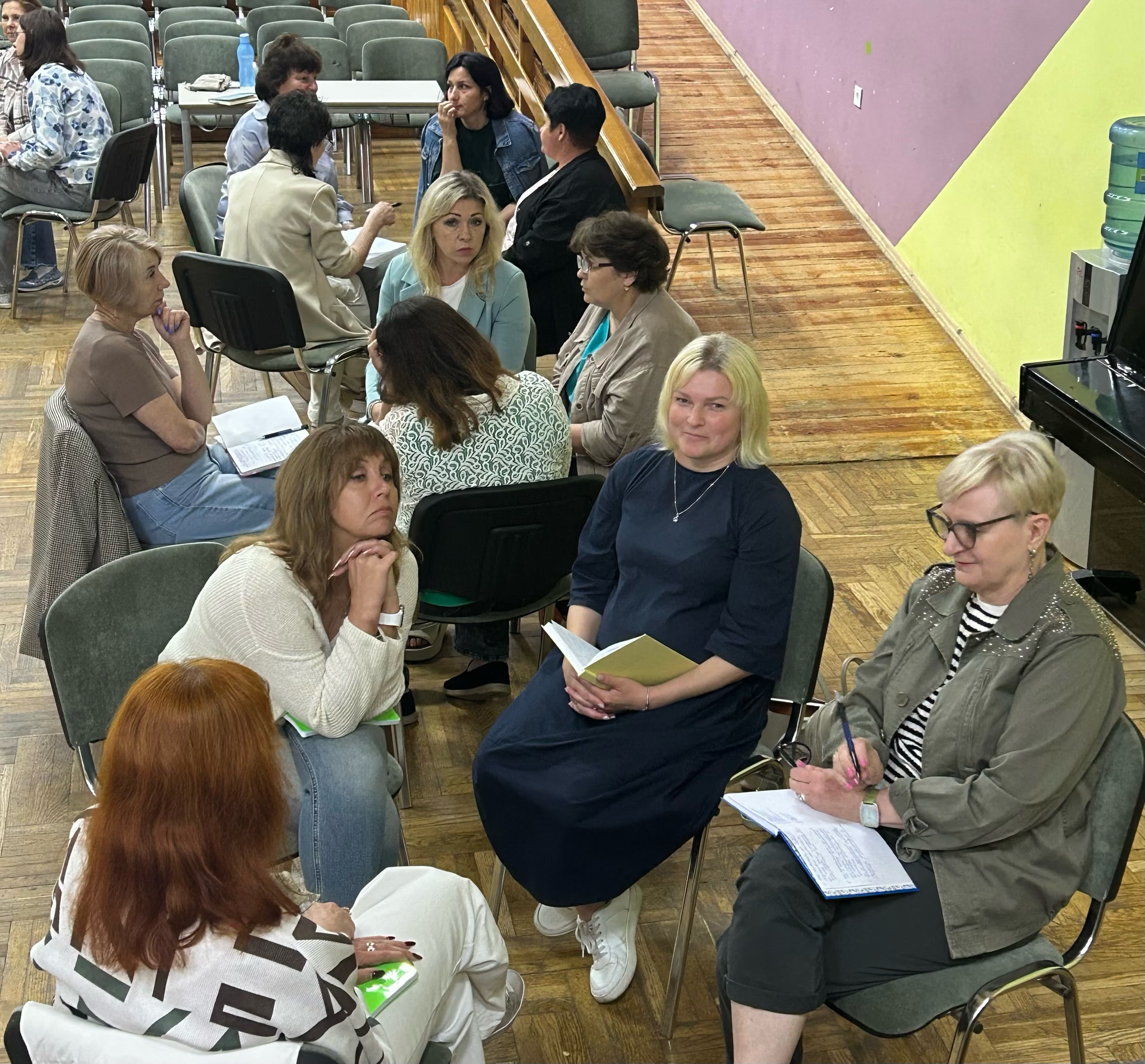
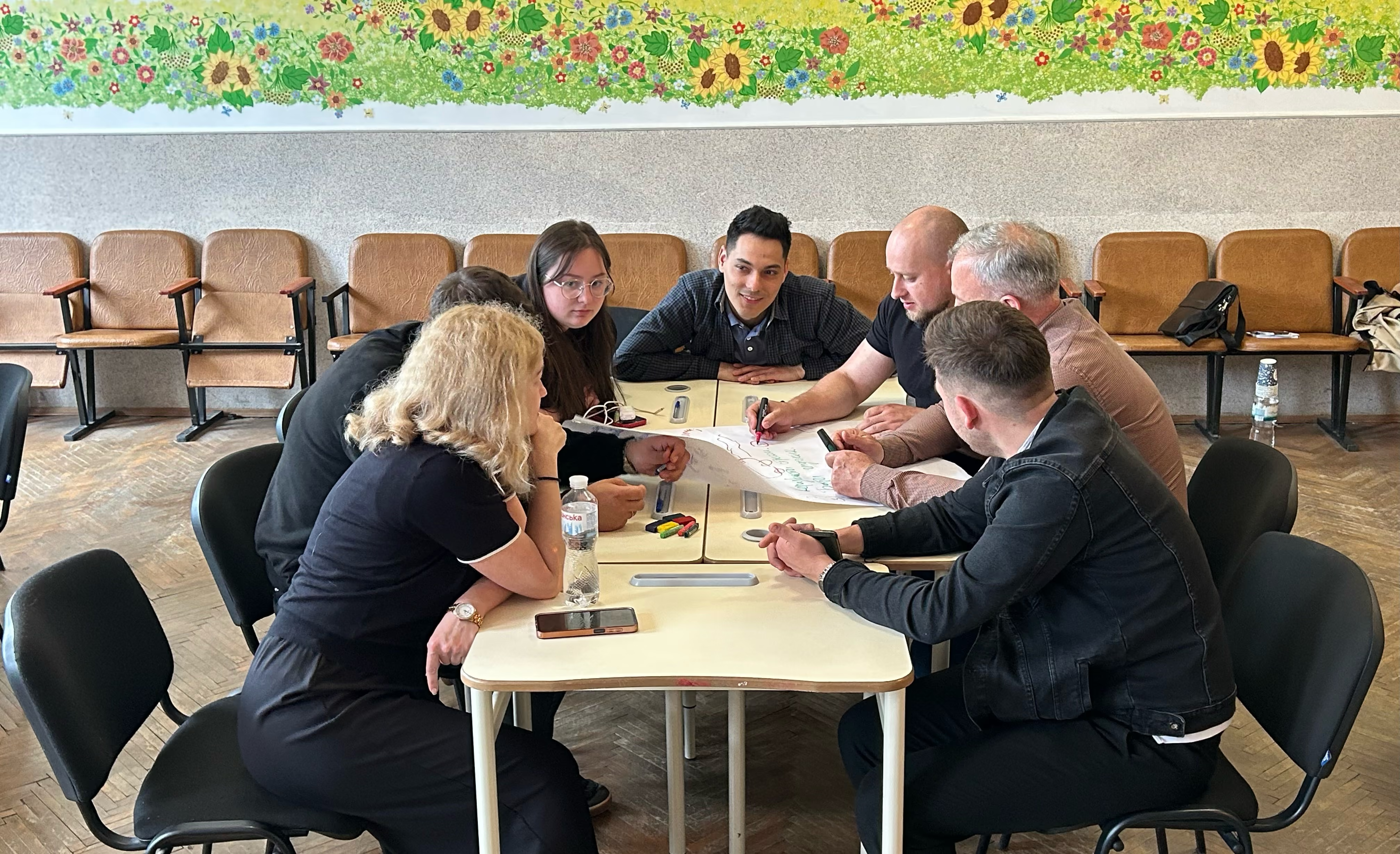
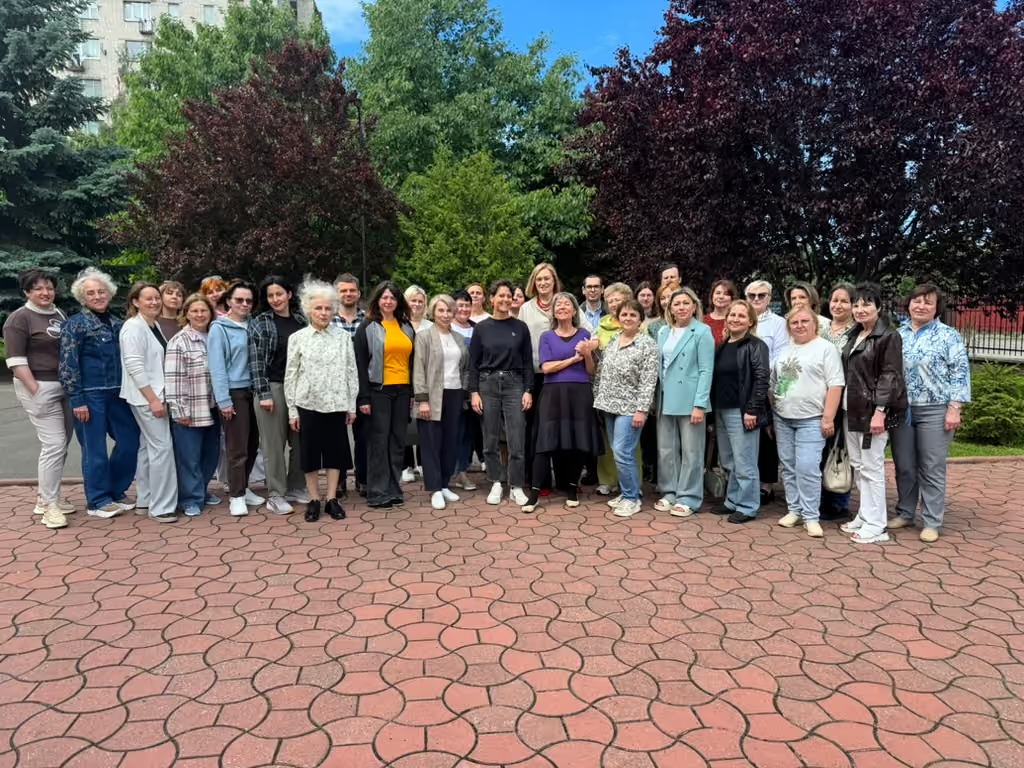
At the request of Ukraine’s Ministry of Education, we brought the Happy Schools approach to Ukraine. Between November 2024 and autumn 2025, we ran four three-day training modules — through air-raid alerts, nights of bombing, and with participants who had travelled from the front lines of the war: 60 school principals from the 30 national pilot schools of Ukraine’s education reform, and the entire teaching staff of a primary school in Vinnytsia.
Dr. Ha Vinh Tho followed this work from afar, already gravely ill. In May 2025, he sent participants a video message: “You will become the centre of education reform in Ukraine.” He died on 26 September 2025. His legacy lives on in this work.
In June 2026, the second phase began: 60 teachers from two secondary schools — in Chernivtsi and near Kyiv — gave themselves three days to step back, slow down, and turn inward. The response was overwhelming.
Was wir bisher erreicht haben
60
School principals from 30 pilot schools — all 4 modules completed (2024/25)
50
Teachers from the primary school in Vinnytsia — all 4 modules completed (2024/25)
60
Teachers from 2 secondary schools — Module 1 completed (June 2026)
30
National pilot schools of the “New Ukrainian School,” drawn from every region of the country
2
Schools now training their entire staff: Chernivtsi & Boyarka
120
New pilot schools for which the Ministry of Education has requested the programme’s expansion (from Sept. 2026)
81
Countries where the PISA Happy Life Dashboard tracks student wellbeing
5
Years of war — and demand for this programme keeps growing
Was Lehrer*innen sagen
These voices come from Module 1 (June 2026) — from teachers who arrived with scepticism, and spent three days alongside their colleagues learning to pause. In the middle of war.
„The most important thing you brought to us is laughter. This helps us to survive in these times.”
„This training is crucial for us. Usually we look only around and now for the first time we look at ourselves.”
„We realized we have happiness inside us and we can grow it and share with others: our family, community and of course our students.”
„I discovered my colleague is a deep person and I am grateful to be here with my colleague. I see my colleagues changed; they started to talk and really listen to each other.”
„I’ve never been connected to nature. All the time I did things automatically. Now I noticed self-care is really important and I can work in another way.”
„Up to this point I was a skeptic of meditation. When I tried I had this miracle: I felt lighter and just relaxed.”

How the Training Works
The programme is built around Dr. Ha Vinh Tho’s three Caring Gestures: care for oneself, care for others, care for community and the planet. Each module runs over three days and brings together:
- Mindfulness-based self-awareness — slowing down, tuning into the body, learning to regulate stress
- Non-violent communication, compassion and deep listening — the groundwork for genuine relationships with colleagues and students
- Shared reflection and classroom practice — translating what’s learned into daily school life
- Connection with nature and community — as a source of renewal and a principle of teaching
Module Structure (Phase II, 2 schools): - Module 1 — Self-Leadership & Resilience (completed, June 2026) - Module 2 — Relational Capacity & Care for Others (October 2026) - Module 3 — Care for Community and Planet (January 2027) - Module 4 — Integration & Passing It On (planned 2027)
Who Stands Behind This Project
Partners: - Ukrainian Ministry of Education and Science — the initiative’s originator and coordinator; contact: Nadiia Kuzmychova (Deputy Minister of Education) - OECD — patronage by Andreas Schleicher (Director for Education and Skills); linked to the PISA Happy Life Dashboard - University of Innsbruck — scientific research led by Dr. Olga Klimecki (cortisol hair samples, questionnaires, qualitative interviews; publications planned from 2028) - Eurasia Learning Institute (Switzerland) — joint application to the John Templeton Foundation
A project by LIFE – Lean In For Education e.V. in cooperation with Mindschool gGmbH
Previous Funders: Dieter Fuchs Stiftung · Friedel & Gisela Bohnenkamp Stiftung · Software AG Stiftung · Stiftung Evidenz


Measuring What Changes
Her research draws on three sources: - Teachers’ own accounts of their wellbeing, self-regulation, and relationships — gathered before, during, and after each module - Hair samples analysed for cortisol levels, offering a biochemical window into how stress shifts over time - In-depth interviews that explore the subtler, longer-term effects of the training.
First publications are expected in 2028. The findings will contribute to the international conversation on education — in collaboration with the OECD.
What Comes Next
From September 2026, Ukraine’s Ministry of Education is expanding its school reform to 120 new pilot schools — and has asked us to accompany them. Should funding come through, we will train two principals per school across four modules: 240 people carrying this work into their schools.
For 2027, a Train-the-Trainer programme is in the works: 30 Ukrainian multipliers trained to run the programme themselves. A Ukrainian-language handbook and a digital learning platform are also planned.
The evidence is there — in the numbers, in what teachers say, in the Ministry’s commitment. What this project needs now are partners: funders who can make the next modules happen, institutions willing to lend their voice, and people who will pass this story on.

Happy Schools — for Your School Too
The initiative supports schools in diverse contexts and countries, making learning, mindfulness, and relational competence tangible and experiential in practice.
We work with schools in different contexts and countries, offering talks, tailored workshops, or a full staff training programme. The entry point is simple; the impact lasts.
Where to start: - A talk: an introduction to Happy Schools and Social & Emotional Learning - A workshop: a first hands-on experience for your staff - A training programme: a full cycle of modules for the whole school.
Curious? Get in touch. → c.leiste@co-intend.com